
(2).png "Laboratório Malária UFMG")
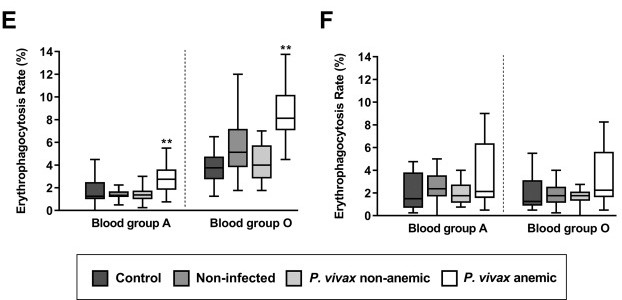
Anemia in vivax malaria is multifactorial and not only the result of the destruction of reticulocytes, which correspond to 1–2% of circulating erythrocytes, but mainly due to the clearance of uninfected erythrocytes. Our research group has shown that IgGs directed against erythrocyte components are related to the removal of healthy red blood cells by two pathways: complement-mediated lysis and induction of reduced membrane deformability, promoting the phagocytosis of erythrocytes in vitro. These two mechanisms are modulated by N-glycosylation patterns of the IgG Fc portion, triggering anti- and pro-inflammatory responses that can define more or less severe clinical outcomes in infectious diseases. Thus, we aim to analyze N-glycosylation patterns of IgGs in patients with or without anemia, identify biomarkers of anemia, monitor changes after specific treatment, and study the functionality of these immunoglobulins in laboratory in vitro assays.
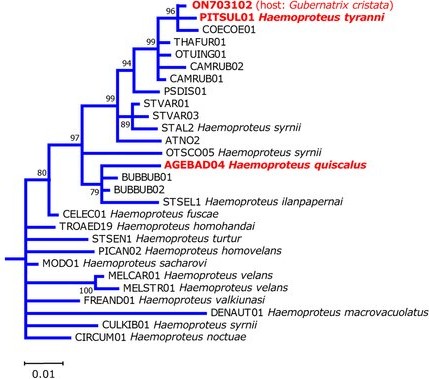
Human actions such as deforestation, urbanization, introduction of exotic species, and climate change negatively impact wild ecosystems, leading to reduced species diversity and altered pathogen transmission. Parasitic infections are frequent, but their negative or positive effects on wild populations have been neglected, even though their relevance for effective wildlife conservation measures is recognized. Avian haemosporidians (Plasmodium/Haemoproteus/Leucocytozoon) are vector-transmitted blood parasites with wide distribution, constituting ideal models for studies of this nature. To this end, we have been analyzing whether and how host factors (sex, age, body condition, plasma protein profile, etc.), parasite factors (taxonomic identity, parasitemia, genetic diversity), climatic variables (seasonality, temperature, humidity), and evolutionary aspects (phylogeny of hosts and parasites) influence the transmission dynamics of these parasites.
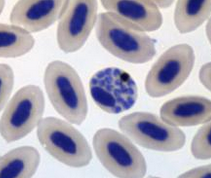
The order Haemosporida is divided into four families: Leucocytozoidae, Haemoproteidae, Garniidae, which infect birds and reptiles, and Plasmodiidae, which affect birds, reptiles, and mammals, using dipteran insects as vectors. Despite advances in the description of Plasmodium and Haemoproteus species, especially in birds, knowledge about other haemosporidians parasitizing wild fauna remains fragmented. The genus Leucocytozoon, which infects birds worldwide, is poorly studied in Brazil, and few articles address its characterization. Leucozytozoon cariamae, a parasite infecting seriemas (birds endemic to Brazil), is the only species described in our country, with morphological, molecular, and phylogenetic characterization carried out by our group. Other neglected genera of the order Haemosporida include Plasmodium, Saurocytozoon, Haemocystidium, and Fallisia, which infect reptiles. The classification of these parasites and the validation of some genera and species is controversial, highlighting the need for integrative studies encompassing morphological, molecular, and evolutionary analyses. Our